
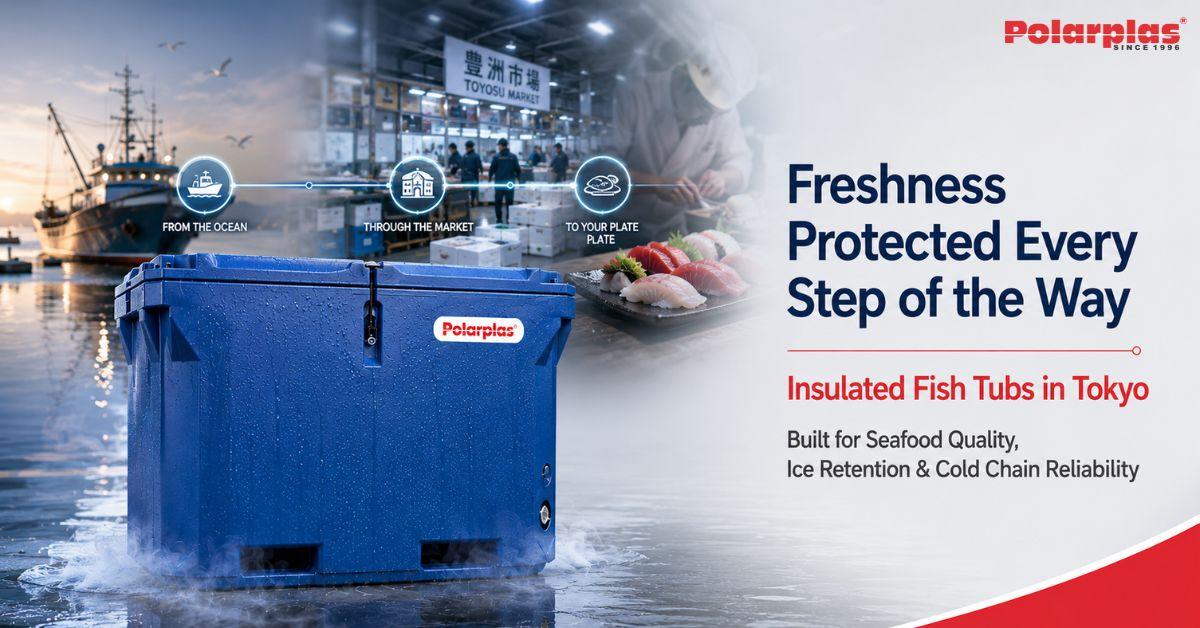
Insulated Fish Tubs in Tokyo
Tokyo has more seafood than almost any city in the world. From early morning tuna auctions at Toyosu to the hundreds of small traders still operating around the old Tsukiji outer market, fresh fish passes through many hands before it reaches a restaurant plate or a supermarket shelf. Every one of those hands needs to keep the fish cold. This is exactly why insulated fish tubs in Tokyo are not just useful equipment, they are a daily necessity for anyone in the seafood business here.
Why Tokyo Seafood Suppliers Have Less Room for Error
Fish spoils faster than most food. Once a fish is caught, the clock starts. If the temperature rises even a little, the texture changes, the smell gets stronger, and the quality drops. In a city like Tokyo, where buyers at Toyosu pay millions of yen for a single bluefin tuna, that kind of quality drop is not acceptable.
Tokyo suppliers also deal with high volumes every single day. Thousands of boxes of fish move through the city before most people wake up. When you are moving that much product that fast, you cannot afford to stop and worry about whether your containers are doing their job. You need equipment that just works.
What the Tsukiji and Toyosu Crowd Actually Looks For
Walk through the outer Tsukiji market on any morning and you will see vendors stacking tubs, moving ice, and handling fish quickly and carefully. These people are not buying containers based on a brochure. They are buying based on what holds up day after day.
Here is what matters most to Tokyo seafood suppliers:
How long does the ice last? This is the first question. A tub that lets ice melt in two hours is useless in a busy distribution run. Suppliers want thick insulation that holds cold temperatures for several hours, even when the tub is being opened and closed repeatedly.
Can it take daily punishment? Tubs get dropped, stacked, dragged across wet floors, and washed with strong cleaning products. Thin plastic cracks. Cheap foam breaks apart. Suppliers need containers built from strong materials like high-density polyethylene that do not fall apart after a few months of heavy use.
Is it easy to clean? Japanese food safety standards are strict. Fish containers must be thoroughly cleaned after every use. Smooth interior walls without corners or grooves make this much faster. If a tub is hard to clean properly, it does not belong in a professional seafood operation.
Does it stack safely? Space is tight in Tokyo markets and delivery vehicles. Tubs that stack neatly without sliding save space and reduce the chance of accidents.
The Cold Chain Problem in a Big City
Tokyo’s seafood industry depends on a reliable cold chain to keep fish fresh from the moment it is caught until it reaches consumers. Fish harvested off the coast of Hokkaido often travels hundreds of kilometres before arriving at restaurants, seafood markets, and retailers across Tokyo. During this journey, the product passes through multiple handling points, including fishing vessels, processing facilities, wholesale markets, distribution centres, and delivery vehicles.
At every stage, maintaining the correct temperature is critical. This is where high-quality fish tubs in Tokyo play an essential role. These insulated containers help protect seafood from temperature fluctuations during loading, unloading, storage, and transportation. By reducing heat transfer and slowing ice melt, fish tubs in Tokyo provide an extra layer of protection throughout the supply chain.
Without dependable fish tubs in Tokyo, the risk of cold chain failure increases significantly. Even short periods of temperature exposure can impact seafood quality, freshness, and shelf life. Reliable insulated fish tubs help suppliers maintain product integrity, minimise waste, and ensure seafood reaches customers in the best possible condition.
Export Adds Another Layer of Pressure
Tokyo is not just feeding Tokyo. Japanese seafood products are exported to markets across Asia, the Middle East, and beyond. For export shipments, fish may spend 24 to 48 hours in transit. The insulation requirements for export are much higher than for a local delivery run across the city.
Suppliers who handle exports need containers that can maintain safe temperatures over a full day or more, especially when refrigerated transport is not available at every stage of the journey.
Why Polarplas Works Well for Tokyo Operations
Polarplas manufactures high-performance insulated containers designed for the demanding requirements of the seafood cold chain. Built using durable materials, these containers are engineered to withstand daily handling, provide excellent ice retention, and support easy cleaning to meet strict food safety and hygiene standards.
For seafood businesses, choosing the right fish tubs in Tokyo is essential for maintaining product quality throughout the supply chain. From fish markets and processing facilities to distribution centres and retail deliveries, reliable insulation helps preserve freshness and reduce the risk of temperature-related spoilage.
Polarplas fish tubs in Tokyo are trusted by seafood distributors, processors, and exporters who require dependable cold chain performance every day. These insulated tubs help protect valuable seafood products during transport and storage, ensuring consistent quality from source to destination. When every stage of the supply chain matters, investing in premium fish tubs in Tokyo means investing in reliability, efficiency, and peace of mind.
Fresh Fish Deserves Better Than a Cheap Box
Tokyo’s seafood industry runs on trust. Buyers trust suppliers to deliver fish in perfect condition. Suppliers trust their equipment to protect products through every stage of handling.
That trust starts with the right containers. Whether you are moving yellowtail from Tsukiji’s outer market, preparing a tuna shipment for export, or running a cold delivery route across the city, insulated fish tubs in Tokyo are the piece of equipment that keeps everything else working. Choose ones built to last, built to clean, and built to keep your fish exactly as cold as it needs to be
