
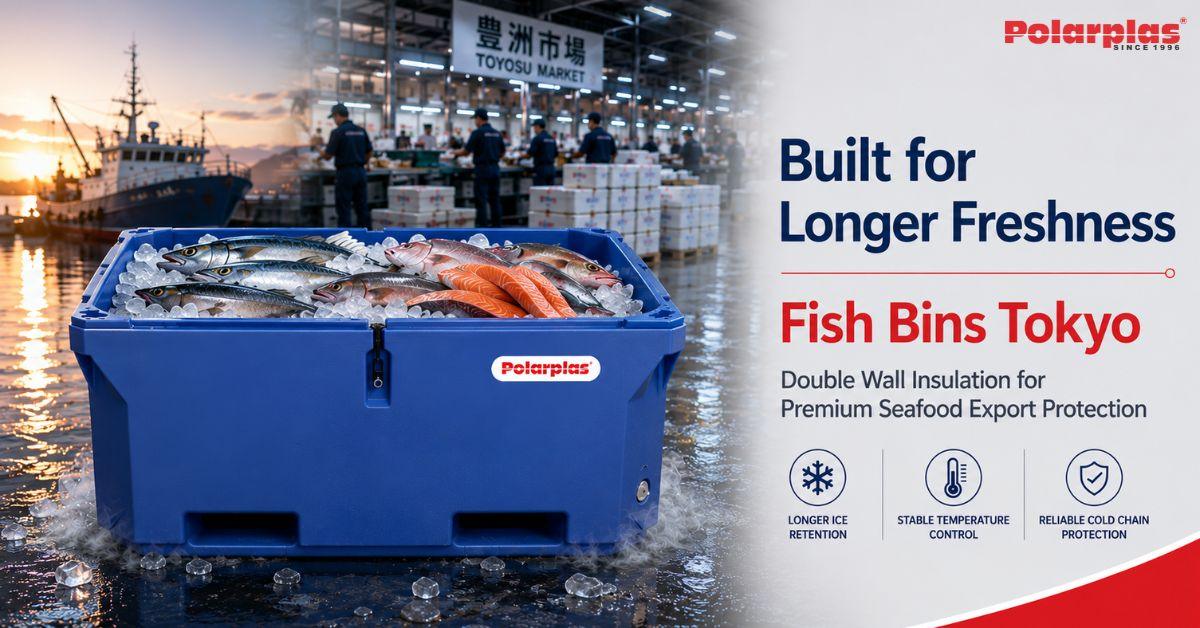
Fish Bins Tokyo: The Smart Choice for Modern Seafood Exports
Every morning at Toyosu Market, thousands of fish boxes move fast. Tuna, salmon, squid, mackerel all of it needs to stay cold from the moment it is packed to the moment it reaches the buyer. That is why more businesses are now choosing fish bins Tokyo exporters can trust to hold temperature all the way through.
Freshness Is the Whole Business
In Tokyo’s seafood industry, maintaining freshness is essential for preserving quality and market value. Whether seafood is being transported from fishing ports, wholesale markets, or processing facilities, improper handling can lead to spoilage, product rejection, and financial losses. This is why choosing the right Fish Bins Tokyo businesses rely on is crucial. High-quality fish bins help maintain optimal temperatures, protect seafood from damage, and ensure products remain fresh, safe, and ready for sale throughout the supply chain. Investing in durable and insulated fish bins is a key step toward delivering premium-quality seafood to customers across Tokyo and beyond.
The Problem with Regular Containers
Old-style containers do one job, they hold the fish. But they do not hold the cold very well. When ice melts too fast, the fish temperature goes up. Even one or two degrees can affect how the fish looks and smells. On a long export journey, that small change can mean a rejected shipment.
Tokyo sends seafood to Europe, North America, the Middle East, and across Asia. These are long routes. A container that cannot hold cold for 24 to 48 hours is not good enough for that kind of journey.
What Double Wall Bins Actually Do
Double-wall insulated bins are specifically engineered to maintain the freshness and quality of seafood during storage and transportation. These bins feature two strong outer walls with a high-performance insulating layer in between, helping to maintain a stable internal temperature for extended periods.
By slowing ice melt and minimizing temperature fluctuations, Fish Bins Tokyo seafood businesses depend on can keep fish fresher for longer. Whether seafood is transported through processing facilities, wholesale markets, airports, or international shipping routes, insulated fish bins provide dependable temperature control and product protection. For exporters and distributors in Tokyo’s seafood sector, this advanced insulation technology is essential for reducing spoilage, maintaining product quality, and ensuring seafood reaches its destination in optimal condition.
Ice Stays Frozen Longer
This is the most important benefit. When ice lasts longer, the fish stays colder. When the fish stays colder, it arrives in better shape.
Exporters who have switched to double wall bins report that ice holds two to three times longer compared to basic containers. That extra time matters a lot when a shipment is moving through multiple checkpoints before it reaches the customer.
Built for Rough Handling
Seafood containers do not have an easy life. They get stacked, dropped, dragged, washed, and loaded onto trucks every single day.
Double wall bins are made to survive this. The outer walls are thick and strong. They do not crack easily. For businesses looking for fish bins Tokyo operations can use day after day, durability is a big reason to upgrade.
Easier to Clean, Easier to Pass Inspection
Japan has strict food safety rules. Every container that touches seafood needs to be clean. If a container has rough surfaces or small cracks, bacteria can hide there.
Double wall bins usually have smooth inside walls. They are easy to wash and dry properly. This helps exporters meet hygiene checks without extra effort.
Protecting Premium Products
Premium-grade tuna can command exceptionally high prices in global seafood markets. When a shipment is damaged, the consequences go far beyond the loss of product value. It can lead to dissatisfied buyers, rejected deliveries, and even the loss of long-term business relationships.
For exporters dealing with high-value seafood, maintaining product quality throughout transit is essential. This is why many rely on fish bins recommended by Tokyo suppliers, which are specifically designed to protect premium seafood. Their superior insulation and durability help ensure that valuable products arrive in optimal condition, safeguarding both profitability and customer trust.
Reusable and Cost-Effective Over Time
Good double wall bins can last for years. They are not single-use. A business that buys them once gets many years of use from each bin.
This makes them cheaper in the long run compared to buying disposable packaging again and again. It also creates less waste, which matters to buyers in markets like Europe where sustainability is watched closely.
Why Polarplas Works for Tokyo Exporters
Polarplas builds insulated containers specifically for demanding cold chain work. Their double wall bins are designed to hold temperature through long journeys, rough handling, and repeated daily use.
Exporters choose Polarplas fish bins Tokyo operations depend on because they are consistent. They perform the same way whether it is the first use or the fiftieth.
The Export Market Is Only Getting Bigger
Global demand for Japanese seafood keeps growing. More buyers want it. More countries are importing it. Supply chains are getting longer and more complex.
That means cold chain protection needs to get better too. Exporters who upgrade their containers now are preparing for that growth, not scrambling to catch up later.
Conclusion
From Toyosu Market to a restaurant in Dubai or London, every fish needs protection the whole way. Temperature drops, long routes, and rough handling are all part of the journey. The right container makes the difference between a perfect delivery and a rejected shipment.
That is why more exporters are choosing double wall fish bins Tokyo businesses rely on to protect their product, their reputation, and their customer relationships from the first pack to the final delivery.
