
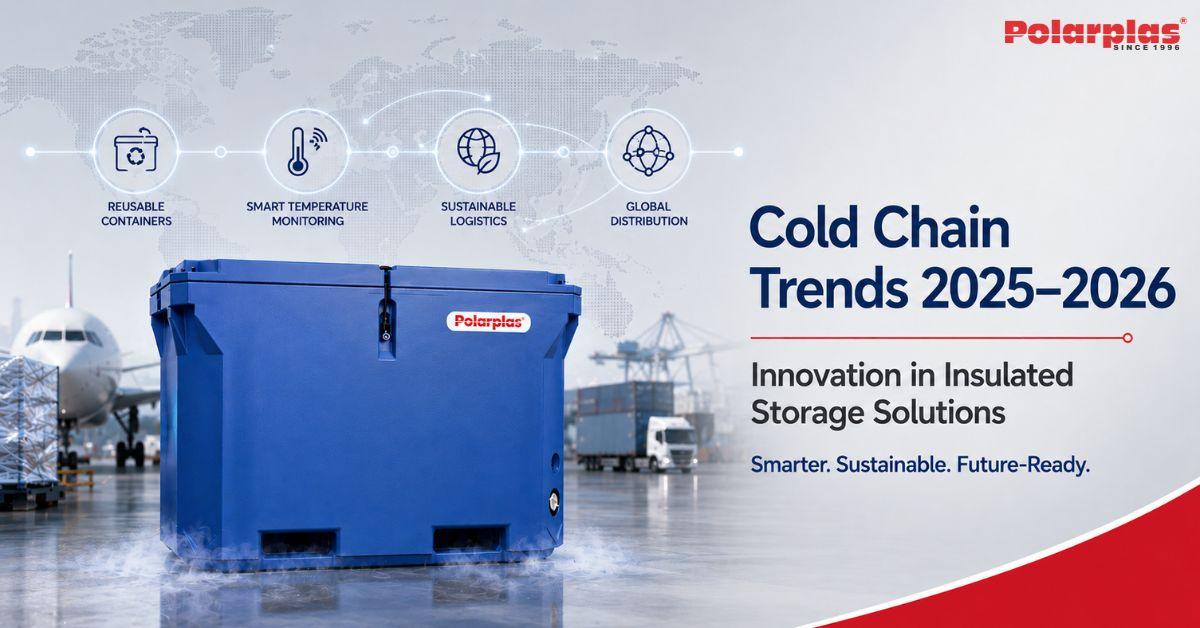
Why Cold Chain Trends Are Changing Fast
Cold chain trends are shifting fast and if your business moves food, medicine, or any product that needs to stay cold, you need to pay attention.More products are traveling longer distances than ever before. A box of fresh fish caught in Norway might end up on a dinner table in Dubai. A vaccine made in Germany might reach a clinic in rural India. All of that requires one thing, keeping the cold, cold the whole way. Here is what is actually changing and what it means for real businesses.
Food Is Traveling Further Than Before
Ten years ago, most fresh food was grown and sold nearby. That is no longer the case. Supermarkets now stock produce from dozens of countries, and customers expect it to arrive fresh.
This is putting pressure on everyone in the supply chain. A truck delay of just a few hours can spoil an entire shipment. A warehouse that runs too warm overnight can ruin thousands of dollars of product. The businesses that are keeping up are the ones investing in better insulated containers, ones that hold temperature longer, even when something goes wrong along the way.
Medicine Cannot Afford Mistakes
Vaccines, insulin, cancer drugs can become completely useless if they get too warm or too cold, even for a short time. And unlike spoiled food, you cannot always tell by looking at a medicine that something is wrong with it.
Healthcare companies are spending more on cold chain protection than ever before. Some vaccines cost hundreds of dollars per dose. Losing a shipment is not just a financial loss, it is a health risk.
This is one of the most important cold chain trends right now: pharmaceutical companies are not cutting corners on temperature control. They are investing in better packaging, better monitoring, and stricter processes.
Companies Are Throwing Away Less Packaging
For a long time, the standard approach was simple: pack your product in disposable foam, use it once, throw it away. It was cheap upfront. But it added up. Think about a company shipping 10,000 orders a month. That is 10,000 foam boxes going to a landfill every single month.
Businesses are realizing that reusable insulated containers actually save money over time. They cost more upfront, but after dozens of uses, the math works out. And customers and regulators are both pushing for less waste. Sustainability is now a core part of modern cold chain trends, not just a nice-to-have.
You Can Now Watch Your Shipment in Real Time
This one has changed a lot in the last few years. Small, cheap sensors can now be placed inside a shipment and send temperature readings every few minutes. If a truck’s refrigeration fails at 2am, someone gets an alert before the whole load is lost.
Before this technology existed, you often only found out something went wrong when the shipment arrived and the product was already damaged. Now businesses can step in early and actually save the load. Real-time monitoring is quickly becoming standard practice across the industry especially for high-value products like medicine and premium food.
Rules Are Getting Stricter
Governments around the world are tightening food safety and pharmaceutical regulations. If you cannot prove your product stayed within the right temperature range from the moment it was packed to the moment it was delivered, you have a problem.
This is pushing companies to document everything. What temperature was the warehouse? What was the temperature inside the container during transport? When was it opened? Insulated containers that come with documentation and certification are becoming more valuable. Businesses need proof, not just good intentions.
Online Delivery Changed Everything
When you order groceries or medicine online, you expect them to arrive in good condition even if you are not home when the delivery arrives. That is a very different challenge from delivering to a supermarket loading dock.
Last-mile delivery is now one of the fastest-growing parts of the cold chain industry. Smaller, lighter insulated containers that work for residential delivery are in high demand. This is a newer cold chain trend that is only going to grow as online shopping continues to expand.
What This Means for Your Business
You do not need to be a massive company to feel these changes. Small food producers, local pharmacies, catering businesses all of them are being affected. The good news is that better solutions are more available than they used to be. Reusable containers are easier to source. Temperature monitoring tools are cheaper. And the knowledge of what works is more widely shared. The businesses that will struggle are the ones that keep doing things the old way because it is familiar.
Final Thoughts
Cold chain trends in 2025 and 2026 are not just about new technology. They are about higher expectations from customers, from regulators, and from the planet. Fresh food needs to arrive fresh. Medicine needs to work. Packaging needs to create less waste. And businesses need to prove, with real data, that they are meeting these standards.
Whether you are shipping a pallet of mangoes or a box of vaccines, getting the cold chain right is no longer optional. It is the baseline. The question is not whether to improve. It is how fast you can get there.
