
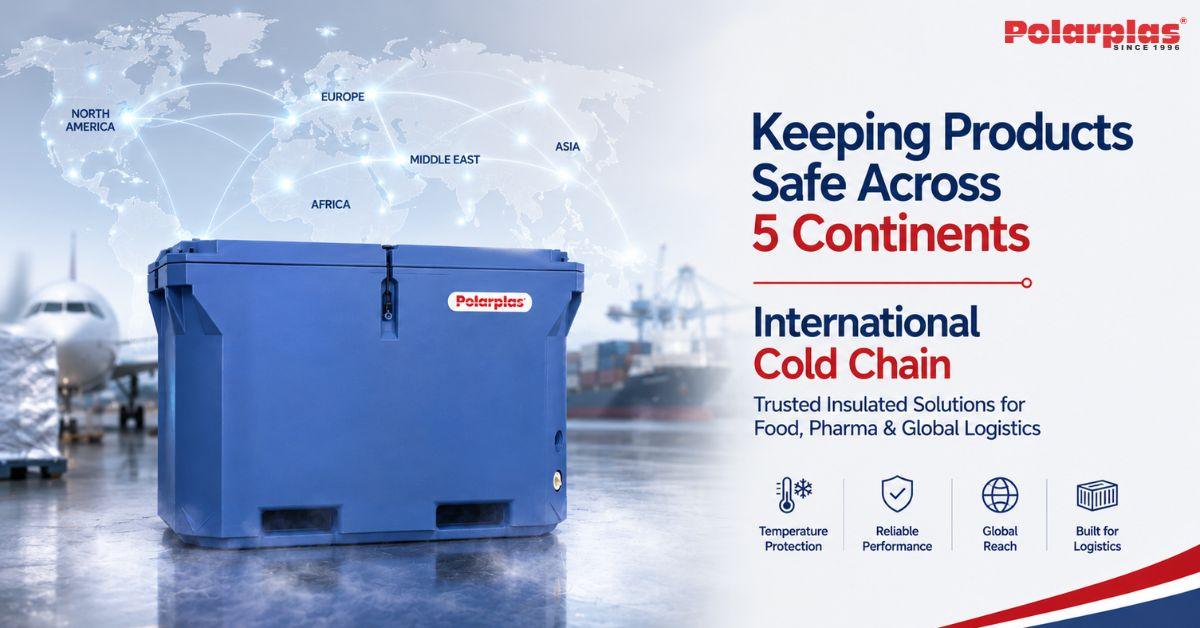
International Cold Chain: How Polarplas Keeps Products Safe
When a box of fresh fish leaves Kenya and arrives in Europe three days later, still cold and still safe to eat, that does not happen by accident. It happens because of the International Cold Chain. This system keeps temperature-sensitive products cold from the moment they leave the farm, the sea, or the factory, all the way until they reach the customer. And for businesses that move food, medicine, or vaccines across borders, getting this right is not optional. One break in the chain and the product is lost.
Polarplas has been building containers for this exact problem since 1996. Started in Gujarat, India, the company now serves customers in over 28 countries across five continents from the heat of sub-Saharan Africa to the cold winters of North America.
Why the Cold Chain Breaks
Most people do not think about what happens between a fish being caught and appearing on a supermarket shelf. The journey is long. Products move from boats to trucks, from trucks to airports, from airports to warehouses, and then to stores. Each of these handover points is a risk. If a container is poor quality, it lets outside heat in. If it cracks or deforms after a few uses, it stops working properly.
The International Cold Chain fails most often not because of bad trucks or broken freezers but because the containers holding the products are not built well enough. A cheap container might keep fish cold for four hours. A well-built one keeps it cold for twelve. That difference decides whether a shipment lands as a sale or a write-off.
What Polarplas Makes
Polarplas manufactures insulated containers using rotational moulding technology. Their products use double wall insulation with PE and PU foaming. This is what keeps the temperature stable inside even when outside conditions are harsh. The containers are made from LLDPE or HDPE raw materials, which means they are strong, food-safe, and built to last through repeated use.
Their product range covers most situations you find in the International Cold Chain. Fish bins and tubs are used by seafood exporters to keep catch fresh from port to processing facility. Insulated ice boxes are used by distributors moving dairy or meat. Insulated carts and buggies move products through airports or cold storage facilities without needing to transfer goods multiple times. Vaccine carriers are used by healthcare organizations moving medicines in countries where the temperature outside can swing dramatically.
Every product is certified by the EU/FDA for direct food contact. The company is also ISO 9001:2015 certified from TUV SUD, Munich which matters when a buyer in Germany or the UK is sourcing containers and needs documentation.
Serving Five Continents
The International Cold Chain does not look the same in every region. A seafood exporter in Mombasa, Kenya has different needs than a pharmaceutical company in Warsaw. A fish distributor in Southeast Asia is working in different conditions than a food company in the middle east.
Polarplas has a direct presence in Europe, the middle east, and the UK, with distributors reaching the rest of the world. Their containers are designed to handle both extremes, the intense heat of sub-Saharan Africa and the freezing temperatures of North America. That range is what makes them practical for businesses operating across regions.
Over 500 customers across 28+ countries use Polarplas products. That number tells you something. Businesses that work inside the International Cold Chain come back to the same supplier when the product does what it promises.
Reusable Containers and Waste Reduction
One issue many businesses face in the International Cold Chain is single-use packaging. Styrofoam boxes get used once and thrown away. They pile up at ports and warehouses and create a disposal problem.
Polarplas containers are built to be reused many times over. Because they are rotationally moulded from durable plastic, they hold their shape and insulation properties after hundreds of uses. For a business shipping products every week, switching from single-use to reusable containers cuts costs and reduces waste at the same time.
What Happens Without a Good Container
Consider a scenario: a seafood company in India is exporting shrimp to a buyer in France. The flight takes nine hours. The shrimp sits in a container at the airport for two hours before loading, then two more hours after landing before it clears customs. That is thirteen hours total where the container has to do its job without any help.
If the container is poor, the shrimp arrives warm. The buyer rejects the shipment. The seller loses the product and the relationship. This is not unusual, it happens regularly to exporters who cut corners on packaging. The International Cold Chain is only as strong as its weakest link, and very often that link is the container.
A Practical Choice for Exporters
Businesses looking to protect their shipments in the International Cold Chain need containers that are certified food-safe, hold temperature under real-world conditions, survive multiple trips without cracking, and come from a manufacturer with a track record. Polarplas has been doing this for nearly thirty years, with 200+ products built for specific industries and use cases.
If your business moves food, seafood, medicine, or vaccines across borders, the container you choose matters more than most people think. The International Cold Chain depends on it.
