
UK food manufacturers, seafood processors, dairies and pharmaceutical distributors now face constant pressure to prove that every load carrier is clean, traceable and compliant. This is why demand for hygienic plastic pallets UK-wide has risen sharply. Wooden pallets absorb moisture and harbour bacteria in their joints, so many warehouses are pulling them off the line entirely. Consequently, hygienic plastic pallets UK-wide have become the standard for businesses that cannot afford a single failed hygiene audit.
Polarplas UK Ltd, based at Hatton Garden in London, is a dedicated supplier of hygienic plastic pallets UK food, seafood and pharma businesses trust. Our food-grade, rotationally moulded pallets are built specifically for the demands of the UK cold chain. Below, we explain why the shift toward hygienic plastic pallets UK-wide is happening, what UK regulations require, and how to choose the right pallet for your operation — whether you are based in London, Grimsby, Hull, Peterhead, Birmingham, Manchester or Bristol.
Quick Facts: Hygienic Plastic Pallets UK Buyers Should Know
- UK food safety standards require load carriers to be non-porous, easy to clean and free of splinters or nails.
- Plastic pallets typically last up to 10 years under normal handling conditions — far longer than a wooden equivalent.
- Nestable hygienic pallets can fit up to three times more units per lorry load when empty, cutting return-transport costs.
- Major UK food brands including large seafood processors and prepared-food manufacturers have already switched their supply chains to hygienic plastic pallets.
Why UK Food & Pharma Industries Are Switching to Hygienic Plastic Pallets UK-Wide
The UK’s food safety framework is enforced by the Food Standards Agency (FSA), and most large retailers also require BRCGS certification from every supplier. Under this level of scrutiny, a wooden pallet becomes a liability. Its joints, nail holes and rough surfaces trap moisture, mould spores and food residue in places a standard wash-down cannot reach. As a result, a single contaminated pallet found during an audit can hold up an entire shipment or even trigger a product recall.
Hygienic plastic pallets solve this problem at a structural level. Manufacturers rotationally mould each pallet as one sealed piece, so there are no joints, no exposed fasteners and no absorbent surfaces. Cleaning teams can pressure-wash, steam-clean or sanitise them between every single use. That is precisely why they have become the preferred load carrier for seafood, meat, dairy, bakery and pharmaceutical distribution across the UK.
What Makes a Pallet “Hygienic”? The Technical Requirements
A genuinely hygienic pallet must be:
- Manufactured from virgin, food-grade HDPE — not recycled or reprocessed plastic, which can carry contaminants.
- Seamless and joint-free, with no cavities where bacteria, dust or pests can accumulate.
- Non-porous and water-resistant, so it withstands repeated high-pressure washing without degrading.
- Free of nails, staples or metal fixings that could contaminate food or damage packaging.
- Chemically resistant to the mild acids, alkalis and sanitising agents used in UK food-processing wash-down routines.
- Dimensionally consistent for safe stacking, racking and automated handling systems.
UK Regulatory Landscape: What Businesses Are Required to Meet
Any business supplying supermarkets, food service chains or export customers must demonstrate compliance with HACCP (Hazard Analysis and Critical Control Points) principles. In addition, most major retail buyers now mandate BRCGS Global Standard for Food Safety certification from their entire supplier base, including packaging and handling equipment providers. Wooden pallets exported outside the UK must also meet ISPM 15 heat-treatment rules. Plastic pallets, however, avoid this extra compliance step entirely, since they require no fumigation or heat treatment before international shipment.
For businesses exporting seafood or prepared foods from UK ports, this matters twice over. First, hygienic plastic pallets are easier to certify domestically. Second, they clear customs internationally without any of the pest-control paperwork that wooden packaging demands.
Polarplas: A Trusted Supplier of Hygienic Plastic Pallets UK-Wide
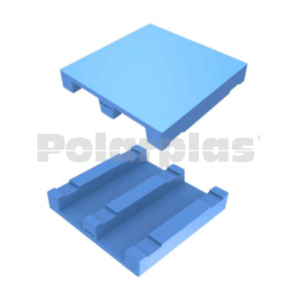
Polarplas hygienic pallets — sealed, seamless construction for UK food-grade handling.
Polarplas has manufactured insulated and structural plastic products for export markets since 1996. Our hygienic pallet range uses the same rotational moulding process that made our insulated fish tubs a trusted name in the UK seafood sector. We produce each pallet from virgin HDPE, seal it with no exposed joints, and build it to survive the repeated wash-down cycles that UK food processors, distribution centres and pharmaceutical warehouses demand.
Because our production is export-focused by design, every pallet leaving our facility withstands long-distance freight, extreme temperature swings and continuous forklift handling. This durability translates directly into a longer working life on UK warehouse floors. Furthermore, businesses already using our insulated fish tubs and bins or insulated coolers can standardise their entire cold-chain equipment on one trusted supplier.
Hygienic Plastic Pallets UK: How They Compare to Wooden Pallets
| Factor | Hygienic Plastic Pallet | Wooden Pallet |
|---|---|---|
| Surface hygiene | Sealed, non-porous, fully washable | Absorbs moisture, harbours bacteria in joints |
| Lifespan | Up to 10 years | 1–3 years typical |
| Export documentation | No fumigation or ISPM 15 treatment needed | Requires heat treatment and certification |
| Weight consistency | Fixed, predictable weight | Varies with moisture absorption |
| Splinter/nail risk | None | Common failure point |
| Stacking & storage | Nestable, space-efficient | Bulky, non-nestable |
Which UK Industries Need Hygienic Plastic Pallets Most
High-demand sectors across the UK
- Seafood processing — Grimsby, Hull, Peterhead, Fraserburgh and Aberdeen, where pallets move between wet processing floors and cold storage constantly.
- Meat and poultry — Yorkshire and the Midlands, where BRCGS audits are frequent and strict.
- Dairy and prepared foods — distribution hubs across Birmingham, Manchester and the M1/M6 logistics corridor.
- Pharmaceutical and healthcare logistics — London and the South East, where contamination-free handling is non-negotiable.
- Retail distribution centres — nationwide, where nestable pallets reduce empty-return transport costs.
A Note on Choosing a UK Pallet Supplier
The UK hygienic pallet market includes several established suppliers offering standard stock sizes and colours. Where Polarplas differs is in custom moulding capability — businesses with non-standard load requirements, branding needs, or combined pallet-and-insulated-container requirements can source both from a single manufacturer with three decades of export-grade production experience, rather than managing multiple suppliers.
How to Choose the Right Hygienic Plastic Pallets UK Businesses Can Rely On
Start with your load weight and racking system, since static, dynamic and nestable pallets each carry a different rating — using the wrong class can void warehouse insurance if racking fails. Next, confirm the pallet uses certified virgin HDPE rather than recycled material, because only virgin-grade plastic reliably passes UK food-contact testing. Finally, consider your washdown frequency: operations cleaning pallets multiple times daily need a fully sealed, smooth-surface design with no lips or ridges where residue can collect.
For businesses already managing insulated fish tubs, ice boxes or refrigeration equipment, standardising pallets with the same supplier simplifies procurement, quality control and after-sales support. Otherwise, this detail is easy to overlook until an audit forces the issue.
Need Hygienic Plastic Pallets UK Delivery for Your Operation?
Get a custom quote for food-grade, export-standard hygienic pallets — delivered across England, Scotland, Wales and Northern Ireland.
Frequently Asked Questions About Hygienic Plastic Pallets UK
Are Polarplas hygienic plastic pallets UK-compliant for food safety audits?
Yes. They are manufactured from virgin, food-grade HDPE with a sealed, seamless surface designed to meet the cleaning and traceability expectations of UK food safety audits, including BRCGS-aligned supply chains.
Do plastic pallets need ISPM 15 treatment for UK export shipments?
No. Unlike wooden pallets, plastic pallets are exempt from ISPM 15 heat-treatment and fumigation requirements, which simplifies customs clearance for UK exporters.
How long do hygienic plastic pallets last compared to wooden pallets?
Under normal handling conditions, a hygienic plastic pallet typically lasts up to 10 years, compared to an average of 1–3 years for a wooden pallet exposed to repeated washdown and outdoor storage.
Can Polarplas supply hygienic plastic pallets UK-wide in bulk?
Yes. Polarplas supplies hygienic pallets and insulated cold-chain products to businesses across England, Scotland, Wales and Northern Ireland, with custom sizing and moulding available for non-standard requirements.
What is the difference between a nestable and a rackable hygienic pallet?
Nestable pallets fit inside one another when empty, saving significant space during return transport, while rackable pallets are designed with reinforced runners for static warehouse racking systems. The right choice depends on your storage and logistics setup.
Are hygienic plastic pallets suitable for pharmaceutical warehouses?
Yes. Their non-porous, chemically resistant surface makes them suitable for pharmaceutical and healthcare logistics environments where contamination-free handling is essential.
Ready to move your UK supply chain to a hygienic, audit-ready pallet system? Contact the Polarplas team or explore our full product range for insulated and hygienic solutions built for UK food, seafood and pharmaceutical logistics.
