
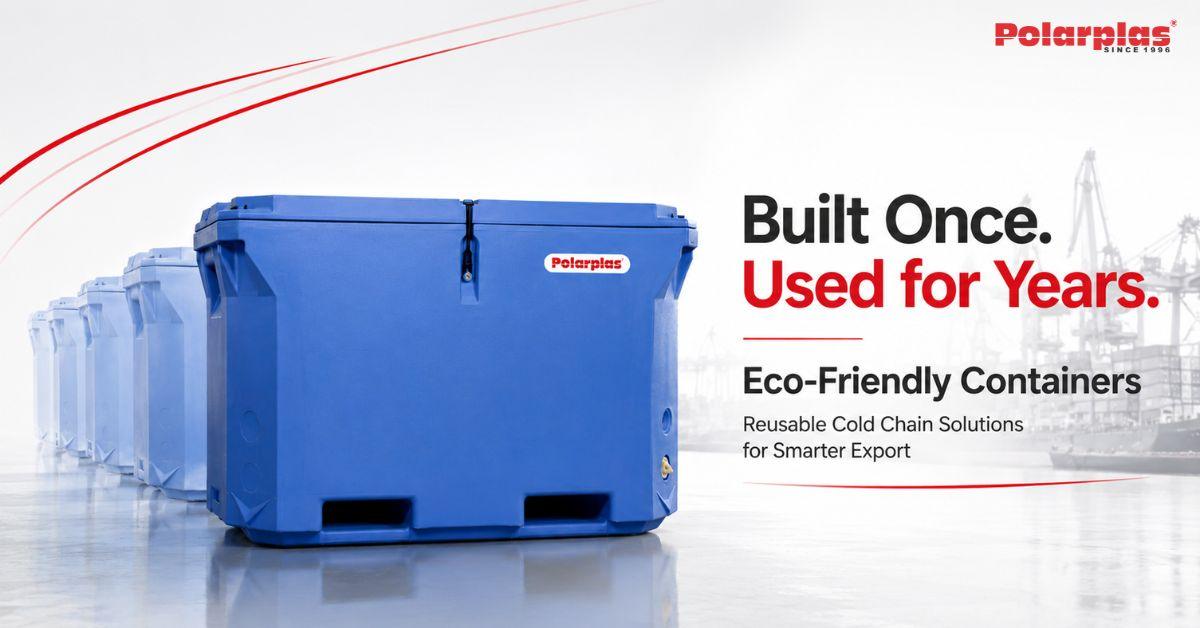
Eco-Friendly Containers: Sustainable Cold Chain for Buenos Aires
Buenos Aires ships a lot of food around the world. Fish, meat, fruits, cheese, and vegetables leave the city every day. Some of this food travels far away across the ocean to Europe, Asia, and North America. These foods need to stay cold the whole way. If they get warm, they go bad. A truck full of fish that goes bad is a truck full of lost money. This is why more companies are using eco-friendly containers to keep food fresh during shipping.
But here’s the real problem: packing all this food makes a lot of trash. Companies use boxes one time and throw them away. The boxes break. Plastic gets destroyed. Workers buy new boxes over and over again, week after week. What if there was a better way? What if you could use the same box many times instead of throwing it away after one trip?
The Problem with Single-Use Boxes
Most companies use cardboard boxes and plastic containers one time, then throw them away. This sounds normal, but it creates big problems:
Boxes Break During Shipping Food gets moved a lot. Trucks bounce around. Boxes get stacked high at warehouses. They get loaded and unloaded at ports. The boxes take a beating. The cardboard gets wet. Corners get crushed. Handles tear off. When boxes break, food can spoil. Or it arrives damaged. Customers send it back. The company loses money.
It Creates Too Much Garbage A company that ships food every day uses hundreds of boxes each week. A mid-size seafood exporter might use 500 boxes a week. That’s 26,000 boxes a year. All going to the trash.
Then there’s all the plastic wrapping, foam, and ice packs. The garbage keeps growing.
It Costs a Lot Over Time Boxes aren’t cheap. A decent shipping box costs $3 to $7. If you use 500 boxes a week, that’s $1,500 to $3,500 just in boxes.
And you buy them again next week. And the week after that. For a year, that’s $78,000 to $182,000 just on boxes.
It Hurts the Environment All these boxes end up in landfills. The plastic takes hundreds of years to break down. The foam never really disappears.
People care about this now. Customers want to buy from companies that don’t make so much trash.
What Are Eco-Friendly Containers?
Eco-friendly containers are strong boxes made to last a long time. They’re not like regular cardboard boxes that break after one use. Think of it like a reusable water bottle instead of plastic bottles you throw away every day. You use it, wash it, use it again. Same idea, but for shipping food.
Here’s how it works:
- A company sends food in an eco-friendly container
- The container arrives at the buyer’s warehouse
- The buyer puts the container back in the system
- The container gets washed
- It ships out again with new food
- This happens 50, 100, sometimes 200 times
These containers have thick walls with insulation inside. The insulation keeps cold air in, so food stays frozen or cool for days.
Why Seafood Needs Eco-Friendly Containers
Seafood is one of the toughest foods to ship. Fish and shrimp go bad very fast. Really fast. At room temperature, shrimp starts going bad in a few hours. Fish lasts maybe a day. After that, it smells bad. No one will buy it. On a ship from Buenos Aires to Europe, the trip takes 2 weeks. Two weeks of sitting in a container. If that container lets warm air in, the food is destroyed.
Eco-friendly containers keep the cold in. They have thick insulation that blocks warm air from getting inside. Ice packs stay frozen longer. The temperature stays steady. Seafood shippers depend on these containers. Without them, they’d lose thousands of dollars in spoiled products every month.
Why Argentine Meat Needs Protection
Argentina is famous for beef. The meat is high quality. Buyers from all over the world want it. But they want it cold. They want it fresh. They want it to arrive exactly as it left Buenos Aires. Regular cardboard boxes with some foam don’t work. Warm air sneaks in. The meat gets too warm. Sometimes it starts to go bad. Even if it doesn’t spoil, it loses quality. The taste changes. The color changes.
A buyer receives meat that doesn’t look right, they refuse it. They send it back or refuse to pay. Either way, the exporter loses. Eco-friendly containers solve this. The thick insulation keeps the temperature steady from Buenos Aires all the way to the buyer’s door. The meat arrives perfectly.
Fruit and Vegetables Are Fragile
Apples, grapes, berries, and lettuce seem tough. But they’re actually very fragile during shipping. Heat damages them. Too much sun exposure burns them. Air that’s too dry shrivels them. Moving around in a truck bruises them.
Regular boxes don’t protect well. Produce gets damaged. Some of it spoils. The company has to throw it away or sell it for less money. Eco-friendly containers protect produce better. The insulation keeps the temperature cool and steady. The box doesn’t break or crush. The produce arrives fresh and beautiful.
The Money Question: Do They Really Save Money?
This is the big question. Do eco-friendly containers actually save money, or do they just cost more?
Let’s do the math with a real example.
Using Throwaway Boxes:
- One box costs $5
- It gets used once
- Then it’s thrown away
- A company shipping 1,000 boxes a year spends $5,000 on boxes
- All $5,000 goes to the trash
- Every year, they spend $5,000 and have nothing left
Using Eco-Friendly Containers:
- One container costs $50
- It gets used 100 times over 5 years
- Cost per use: 50 cents
- A company shipping 1,000 boxes a year needs only 10 containers
- Initial cost: $500
- But the containers last 5 years
- Total cost: $500 ÷ 5 years = $100 per year
- That’s 100 times cheaper per shipment
Plus and this matters a lot when food doesn’t spoil, the company sells more of it. Less waste means more money in the bank.
Real savings could be $4,900 per year. That’s huge.
Eco-Friendly Containers Are Built to Last
Shipping food is rough work. Containers get:
- Stacked high at warehouses
- Loaded onto big trucks
- Bounced around on bumpy roads
- Unloaded at ports
- Moved by forklifts
- Stacked again at the buyer’s warehouse
Regular cardboard boxes can’t handle this. They bend. They tear. They get wet and fall apart.
Eco-friendly containers are made from strong plastic and thick materials. They’re built for rough handling. After 100 uses, they still look almost new. The handles don’t break. The corners don’t crush. Workers can stack these containers 5 or 6 high without worry. The bottom ones don’t collapse. The food stays safe.
Cleanliness and Food Safety
Food safety is serious. It’s not just about following rules, it’s about keeping people healthy. A dirty container can make people sick. Bacteria can grow inside. Mold can hide in cracks. Regular cardboard boxes are the worst for cleanliness. Cardboard absorbs moisture. It creates hiding spots for bacteria. Once they’re used, they get thrown away so companies just buy new dirty boxes.
Eco-friendly containers are smooth and flat inside. They wash clean easily. You spray them with hot water and soap. The water runs right off. No spots stay wet. No bacteria hides. These containers are designed to be cleaned over and over. Companies clean them between each use. The food stays safe.
Reducing Waste Makes Sense
Every eco-friendly container used means one less cardboard box going to the landfill. A company that ships 1,000 boxes a year eliminates 1,000 pieces of trash per year just by switching.
Multiply that by hundreds of companies doing the same thing that’s hundreds of thousands of boxes staying out of landfills. That matters. It really does. The planet gets cleaner.
What Makes Eco-Friendly Containers Work Well
The key is the insulation. These containers have thick foam or gel packs inside the walls.
The insulation does three things:
- Keeps cold air in – The cold from ice packs or refrigeration stays trapped inside
- Keeps warm air out – Hot sun and truck heat don’t get through
- Keeps temperature steady – Sudden changes don’t happen
Regular boxes are thin. Heat moves through them fast. Temperature changes quickly. That’s the real difference. It’s all about the insulation.
Companies Are Making the Switch
More and more food exporters in Buenos Aires are choosing eco-friendly containers. They’ve done the math. They see that it costs less over time. They see less spoilage. They see happier customers.
Some companies started with just a few containers to test them. Then they ordered more. Now they’ve switched completely. Word spreads. Other companies see it working. They switch too.
The Future of Food Shipping
In a few years, throwing away boxes might seem crazy. Just like throwing away a plastic bottle instead of reusing it seems wasteful to people today.
Food shipping will change. More companies will use containers they can use again and again. This is already happening. It’s not a future idea it’s happening now.
Why Buenos Aires Needs This
Buenos Aires is the center of food export in Argentina. The city ships billions of dollars worth of food every year. That’s billions of dollars worth of boxes. That’s millions of tons of trash.
If every company switched to eco-friendly containers, the change would be huge. Less garbage. Lower costs. Happier customers. Buenos Aires could become known as a city that ships great food and does it in a way that helps the planet. That’s good for business and good for the world.
The Simple Truth
Here’s what matters:
- A throwaway box gets used once, then it’s gone
- An eco-friendly container gets used 100 times and still works fine
One creates trash. One doesn’t. One costs $5 per use. One costs 50 cents per use. One way hurts the planet. One way helps it. That’s the difference. It’s simple.
Making the Switch
If a company is thinking about switching, it’s not complicated. They start small. They order some eco-friendly containers. They use them for a few shipments. They see how it works.
They watch the costs. They see less spoilage. They get feedback from buyers who like that the company is trying to help the planet. Then they order more containers. They switch completely. Most companies that try it never go back to throwaway boxes.
What Happens When Companies Choose Eco-Friendly Containers
The changes happen fast:
- Less trash – No more throwing away hundreds of boxes
- Lower costs – Spending way less per shipment
- Less spoilage – Food stays fresher longer
- Happier customers – Products arrive better quality
- Better reputation – Customers see you care about the planet
- More profit – All the money saved goes to the bottom line
It’s a win for the company. It’s a win for the customer. It’s a win for the planet.
Conclusion
Buenos Aires sends food all over the world. That food needs to stay cold so it doesn’t spoil. But it doesn’t need to create mountains of garbage. Eco-friendly containers do the job right. They keep food cold and fresh. They last for years. They cost less money over time. They help the planet.
That’s why smart companies choose them. And that’s why more and more companies in Buenos Aires are making the switch.
