
Why Healthcare Workers in Abuja Cannot Afford to Ignore Vaccine Cold Chain
Vaccines do not survive carelessness. In Abuja’s climate, where midday temperatures sit well above 30°C for most of the year, a vaccine carrier Abuja healthcare teams use is not a convenience, it is the difference between a dose that works and one that has to be thrown away. A reliable vaccine carrier clinics and outreach teams depend on keeps temperatures stable from the moment vaccines leave cold storage to the moment they reach the patient. Without it, the entire journey means nothing.
What Happens When the Cold Chain Breaks
Most people outside healthcare do not appreciate how narrow the temperature window for vaccines actually is. The WHO standard for most vaccines is 2°C to 8°C. Drop below that range and some vaccines freeze, which damages them permanently. Rise above it and the active components degrade often with no visible sign. A vaccine that has been heat-damaged looks identical to one that has not. There is no smell, no discoloration, no way to tell by eye that anything is wrong. This is precisely why the vaccine carrier facilities choose cannot be an afterthought.
A shipment arrives at a clinic in Wuse or Kuje. The carrier was inadequate. The vaccines sat at 28°C for two hours in traffic. The doses look fine. They get administered. They do not work. The children who received them are not protected, and nobody knows until an outbreak confirms it. This is the real cost of choosing the wrong vaccine carrier healthcare facilities rely on for their outreach work. Every vaccine carrier clinic administrators procure should be evaluated with this scenario in mind.
Why Abuja Presents Specific Cold Chain Challenges
Abuja is not a forgiving environment for cold chain logistics. During the dry season, ambient temperatures regularly exceed 35°C and sometimes push past 40°C in direct sun. A vehicle parked outside a government building with vaccines inside even briefly can expose the carrier to conditions that accelerate temperature rise significantly. A vaccine carrier Abuja outreach teams use must account for these unplanned delays, not just the planned route time. Any vaccine carrier drivers carry in field vehicles should be rated for ambient temperatures above 40°C.
Traffic compounds the problem. The drive from a central cold store to a clinic in Gwagwalada or Abaji can take two to three hours on a good day, longer when traffic backs up. Every minute spent sitting in a stationary vehicle with the engine off adds heat stress to the carrier. This is a daily reality for any vaccine carrier outreach teams use on inter-area routes. A vaccine carrier outreach teams take on long routes needs insulation rated for extended hold times, not just short clinic-to-clinic runs.
Then there is the electricity situation. Many clinics outside the city centre do not have reliable power, which makes the vaccine carrier workers rely on even more critical. When a team arrives and there is no functional refrigeration at the destination, the vaccine carrier Abuja workers carry becomes the only cold storage available for however long the outreach session runs. It has to hold temperature without any top-up cooling.
What a Proper Vaccine Carrier Abuja Teams Should Be Using
The insulation is what separates a genuine vaccine carrier Abuja healthcare workers can trust from a basic cooler box. Every vaccine carrier Abuja hospitals and clinics procure should be tested against local ambient temperatures before being deployed in the field. Quality carriers use high-density polyurethane foam in the walls, which slows heat transfer far more effectively than polystyrene. The thickness of those walls matters, a 50mm wall holds significantly longer than a 25mm wall under the same ambient conditions.
Cooling is typically provided by ice packs or phase-change gel packs. These need to be pre-conditioned correctly before use placed in a refrigerator rather than a freezer, so they sit at the right temperature without risking freezing damage to vaccines placed directly against them. A vaccine carrier Abuja clinics use regularly should come with guidance on ice pack preparation, because incorrect conditioning is one of the most common causes of vaccine damage even when the carrier itself is high quality. Any vaccine carrier supplier worth working with will cover this during handover.
Temperature monitoring is another non-negotiable. The best vaccine carrier outreach programs rely on includes either a built-in digital thermometer or a colour-change indicator card that records whether the internal temperature has gone out of range at any point during transport. Without this, healthcare workers are making assumptions. With it, they have documentation that the cold chain was maintained or a clear signal that it was not. A vaccine carrier health programs used for outreach should always include this monitoring capability. Without it, the vaccine carrier teams depend on is operating on trust rather than evidence.
Durability and Hygiene in Daily Use
A vaccine carrier health workers use in the field takes real punishment. It goes into vehicles, comes out, gets set on floors, carried down unpaved paths, and loaded and unloaded multiple times a day. Every vaccine carrier Abuja procurement teams select should be evaluated under field conditions, not just warehouse conditions. Hinges crack. Lids warp. Seals compress and stop closing flush. A carrier that holds temperature perfectly on day one but leaks warm air after three months of this treatment is not a solution, it is a liability that gets harder to spot over time.
Build quality matters in ways that are only obvious with time. Thick outer shells resist cracking on rough roads. Robust latches stay closed even when the carrier gets jostled in a vehicle. Evaluating a vaccine carrier Abuja teams will use on these routes means testing the physical construction, not just the insulation rating. The right vaccine carrier facilities invest in is one built for years of daily use, not months. A vaccine carrier clinics replace every season is not saving money it is hiding a cost.
Hygiene is equally serious. Vaccines are medical products, and the environment they travel in must be clean. Every vaccine carrier Abuja healthcare staff use should meet the same cleanliness standards as any other clinical equipment. A good vaccine carrier Abuja clinic clean between uses has smooth, non-porous internal surfaces that disinfectant can reach completely. Keeping a vaccine carrier Abuja healthcare teams use in a hygienic condition is as important as maintaining its thermal performance. Textured or seamed interiors trap bacteria and are difficult to clean thoroughly, which is a real problem for equipment used repeatedly across different outreach sessions.
What Remote and Rural Outreach Demands
The outreach teams working beyond Abuja’s city boundaries face the hardest conditions. Clinics serving communities in Kuje, Kwali, or the rural stretches of the FCT are sometimes hours from the nearest cold storage facility. Vaccination drives in these areas run all day, under direct sun, with no backup refrigeration. Every vaccine carrier Abuja rural teams take into the field must be up to that standard. The vaccine carrier Abuja outreach workers depend on in these situations has to perform without fail across a full working day.
These teams also need carriers that are practical to carry. A vaccine carrier rural outreach workers can manage on foot, on a motorbike, or in a shared vehicle needs to be the right size and weight for the job. Talking to a supplier who understands how a vaccine carrier field teams actually use it rather than how it performs in a warehouse makes all the difference. Oversized carriers that hold more than needed are harder to transport and harder to keep cold efficiently. Matching carrier size to dose volume is a practical decision that affects cold retention. Any vaccine carrier Abuja outreach coordinator selects should be sized to the actual number of doses being transported, not just the largest scenario.
Choosing the Right Supplier
Not every supplier understands what the vaccine carrier healthcare systems actually need. Choosing a vaccine carrier Abuja suppliers cannot support locally for replacement parts, sizing advice, or technical questions creates problems down the line. The right supplier for a vaccine carrier programs depend on should have direct experience with field conditions across the FCT, not just generic product knowledge. A vaccine carrier Abuja team can actually get serviced and replaced locally is worth more than a cheaper import with no local support. Generic imported coolers may meet cold-chain specifications in controlled test conditions but fall apart quickly under Nigerian field conditions. The right supplier knows how Abuja’s heat, roads, and operational demands differ from temperate-climate assumptions built into standard products.
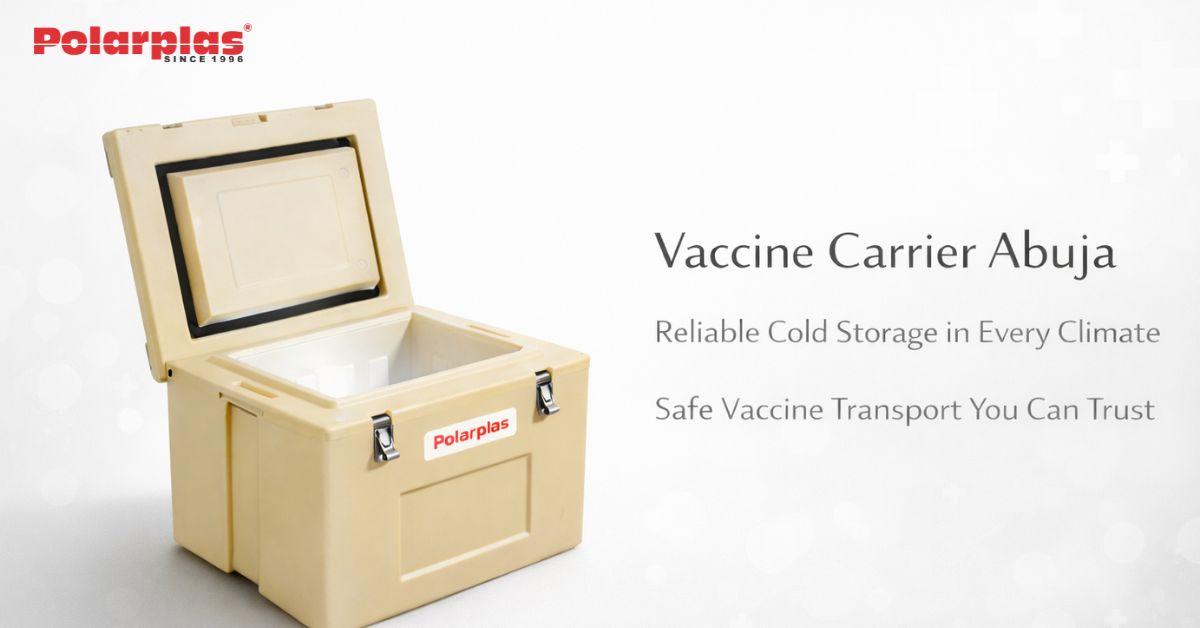
Polarplas manufactures vaccine carrier healthcare teams have tested under real local conditions. Their carriers are built for high ambient temperatures, extended hold times, and the daily wear that comes with active field use. Each vaccine carrierteams receive from Polarplas is backed by knowledge of how the FCT’s conditions differ from what generic cold-chain products are designed for. When you need a vaccine carrier healthcare delivery programs can count on for the long term, that context matters. For any clinic, hospital, or outreach program looking for a vaccine carrier Abuja healthcare workers can depend on across years of use, Polarplas offers products designed around the actual demands of the job. If your team needs a vaccine carrier, Abuja field conditions will not defeat, Polarplas is the right conversation to start.
Conclusion
Every vaccine that reaches a patient in perfect condition represents a chain of correct decisions from cold storage to transport to administration. The vaccine carrier health workers carry is one of the most important links in that chain. No other piece of equipment in the cold-chain has as much exposure to risk as the vaccine carrier Abuja workers take into the field. When a vaccine carrier programs rely on performs correctly, it is invisible the vaccines arrive, the sessions run, the children get protected. Get it right and children get protected, outbreaks get prevented, and trust in healthcare programs holds strong.
Get it wrong and the consequences are invisible until they are not. Damaged doses that look fine. Children with no protection they do not know about. Communities left exposed. Choosing the right vaccine carrier conditions demand is how healthcare teams prevent this. A vaccine carrier a clinics trust year after year is one of the most cost-effective investments in public health a facility can make. The choice of vaccine carrier healthcare facilities make is not a procurement footnote it is a public health decision with real outcomes every single day. Invest in the right vaccine carrier conditions demand, and that investment shows in every successful vaccination session.
