
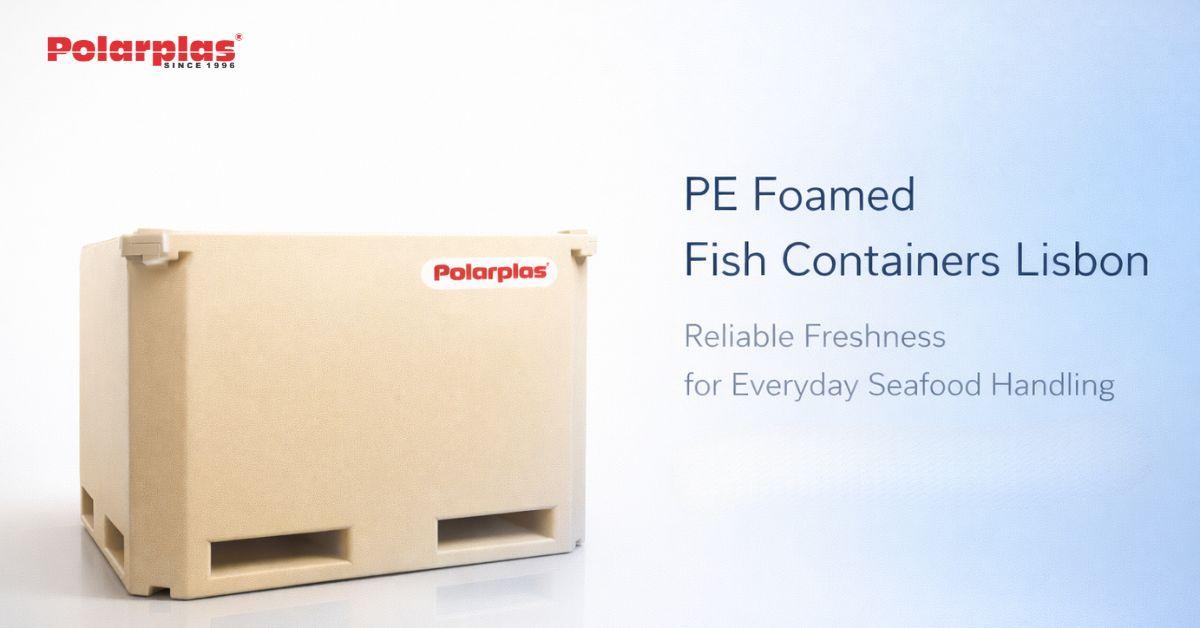
Walk through Mercado da Ribeira before 7am and you’ll see them everywhere stacked by the entrance, lined up along the stalls, packed tight with ice and the morning’s catch. PE foamed fish containers are practically part of the furniture in Lisbon’s fish markets. And there’s a good reason for that.
This city takes its seafood seriously. Lisboetas can tell the difference between fish that’s been handled well and fish that hasn’t. So can the restaurateurs who source daily from wholesale suppliers near the Docas. When your reputation is built on freshness, you don’t cut corners on how you store your product.
The Problem with Keeping Fish Fresh in Lisbon
Lisbon isn’t exactly cool. By July and August, market temperatures push well past 30°C and that’s in the shade. Fish is unforgiving in that kind of heat. Leave it poorly stored for even a couple of hours and you’ll know about it before you even look at it.
The sellers who’ve been working these markets for years figured out early on that not all containers are equal. Heavy plastic crates look sturdy, but they do almost nothing to keep the cold in. Metal is worse. Neither gives you the kind of insulation you actually need when you’re trading through a hot Lisbon afternoon. That’s the gap that PE foamed fish containers fill and they fill it well.
What Actually Makes Them Work
The foam itself is the secret. Polyethylene foam is full of tiny trapped air pockets, and air is a terrible conductor of heat. That’s not marketing language it’s just physics. When you pack fish and ice into a PE foamed container and close the lid, the cold stays in and the heat stays out for far longer than you’d get from a standard crate.
For a seller who starts at 5am and is still trading at 1pm, that matters enormously. Fish that arrives fresh at the stall should still look and smell fresh when the last customer of the morning picks it up. With proper PE foamed fish containers in Lisbon’s warmer months, that’s achievable. Without them, it’s a gamble.
Why Lisbon’s Market Sellers Actually Like Using Them
Ask any stall holder at Mercado de Campo de Ourique and they’ll tell you the same things. It’s not just that the containers work it’s that they’re easy to work with.
They’re light. When you’re shifting dozens of boxes before sunrise, light matters. Even fully loaded, PE foamed containers are manageable in a way that solid alternatives simply aren’t. Workers move faster, backs hold up better, and the whole operation runs more smoothly.
They’re also easy to clean, which counts for a lot in a fish market. The smooth inner surfaces don’t hold onto residue the way textured plastic can. A quick wash and they’re ready for the next batch. In an environment where hygiene inspections happen and health standards are non-negotiable, that simplicity is genuinely useful.
And they’re affordable enough that replacing a damaged one doesn’t become a crisis. Margins in fish trading aren’t always generous. Equipment that does the job without eating into profits is always going to win out.
Beyond the Market Stall
It’s not just the open market traders who rely on PE foamed fish containers in Lisbon. The city’s wholesale suppliers, the ones moving large quantities of fresh catch to restaurants across Chiado, Príncipe Real, and Belém depend on them too.
A chef ordering the day’s fish expects it to arrive in the same condition it left the supplier. That means proper cold chain management from the moment the fish is packed to the moment it hits the kitchen. PE foamed containers handle short-haul delivery well, keeping temperatures stable without the cost or bulk of refrigerated packaging.
Some suppliers also use them for export runs of shorter cross-border routes where the fish needs to stay cold but doesn’t need to travel in a fully refrigerated vehicle. It’s a practical middle ground that works because the insulation actually holds.
What to Look for When Buying Them
Not all PE foamed fish containers are made the same, and in Lisbon’s competitive market, quality differences show up quickly.
Foam density is the main one. Denser foam means better insulation and longer cold retention worth paying slightly more for if your trading hours are long. A well-fitted lid is just as important; a loose lid defeats the whole point. Look for containers with drainage options too, since meltwater needs somewhere to go, especially in the heat.
Polarplas produces containers built specifically for seafood handling, with the kind of construction that holds up to daily commercial use. For sellers who need reliable performance rather than a cheap option that wears out fast, that matters.
The Simple Truth
Lisbon’s relationship with seafood is old and proud. The standards are high because the expectation is high from the customer buying a kilo of sardinhas to the Michelin-starred chef sourcing dourada for the evening service.
PE foamed fish containers don’t get much credit in that story. But they’re part of what makes it work. The right container keeps good fish good from the dock, through the market, and onto the plate. In a city that cares this much about what’s on that plate, that’s not a small thing.
