
Lisbon Moves a Lot of Fish, and the Margin for Error Is Thin
Lisbon has always had a serious relationship with the sea. The Atlantic is right there, the fishing tradition runs deep, and the export infrastructure has grown to match it. Every day, tonnes of fresh fish, shellfish, and cured seafood leave this city bound for kitchens across Europe and beyond. The logistics look smooth from the outside, but anyone working inside the industry knows how unforgiving the chain actually is. The moment the fish leaves the water, the clock starts. Temperature, handling, and containment are not secondary concerns, they are the whole game. One weak link and you are not just losing a product, you are losing a client. That is why choosing the right fish tubs supplier in Lisbon is not a procurement footnote. It is a core operational decision.
What Insulated Fish Tubs Actually Do (and Why Generic Containers Fall Short)
Seafood export is not the same as moving dry goods. You are managing a living, perishable product that responds badly to even slight temperature fluctuations. A container that works fine for vegetables may completely fail when you are trying to hold Atlantic sea bass at 0–2°C through a six-hour road transit.
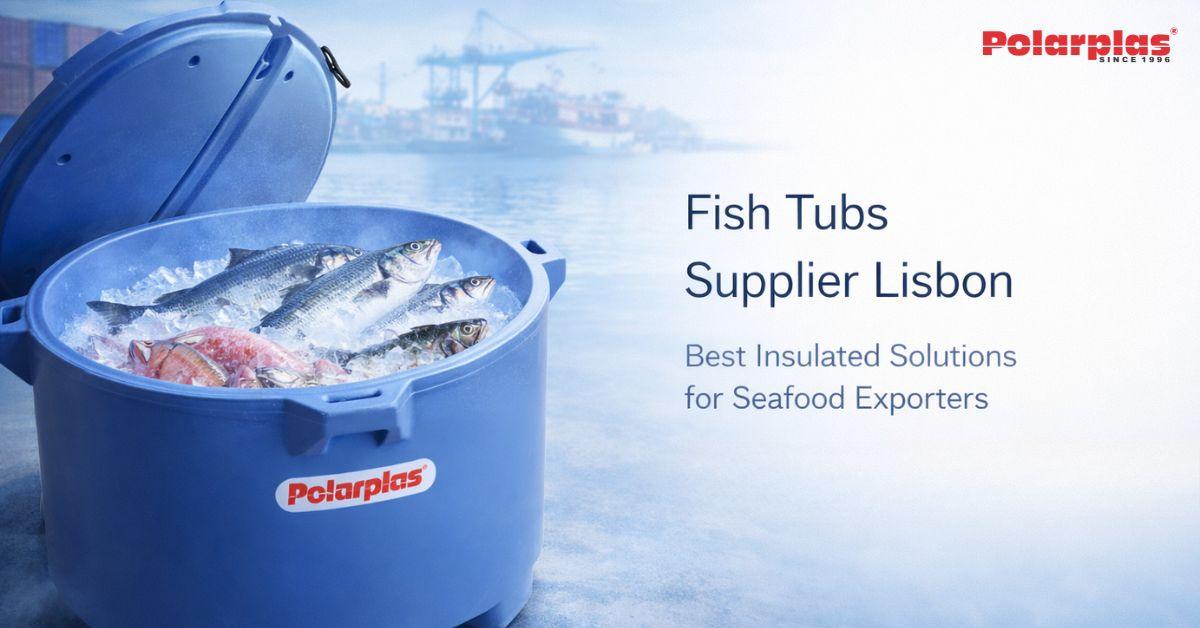
Insulated fish tubs are built specifically for this environment. The walls are thick enough to slow heat transfer meaningfully, not just for an hour, but across the duration of a full loading, transit, and delivery cycle. Used correctly with ice or gel packs, they hold internal temperatures stable even when the outside conditions are warm which, in a Lisbon summer on a sun-baked loading dock, is not a hypothetical scenario.
The material matters too. Commercial fish tubs are made from food-grade plastic engineered for repeated use, rough handling, and chemical cleaning agents. They are smooth internally to prevent bacterial buildup and designed so water drains cleanly rather than pooling around the product.
The Realities of Long-Distance Seafood Export from Lisbon
Exporting from Lisbon often means the product is travelling far to Germany, the UK, Scandinavia, or further east. That is not a two-hour delivery run. That is a multi-day logistics chain involving cold storage handoffs, customs holds, and road freight operating across different climate zones.
During all of that, your insulated tubs are the one physical barrier between your product and spoilage. Lightweight enough to stack efficiently without creating dangerous load weight, strong enough to survive forklifts and conveyor belts, and sealed well enough that meltwater stays contained rather than contaminating other cargo.
This is why exporters who have been through the pain of inferior containers once rarely make the same mistake twice. A tub that cracks under stack pressure on a pallet, or one that loses its insulation properties after fifty wash cycles, costs far more in the long run than the upfront saving suggested.
Hygiene Is Not Optional It Is a Regulatory and Commercial Requirement
Seafood export operates under strict food safety regulations, and the containers you use are part of that compliance picture. Tubs that are difficult to clean, have rough interior surfaces, or degrade in ways that create crevices for bacterial growth can become a liability not just in terms of product quality, but in terms of audit findings, export certifications, and client trust.
High-quality insulated fish tubs are designed with this in mind. The surfaces clean down quickly and completely, they tolerate the industrial cleaning products used in processing facilities, and they maintain their structural integrity over hundreds of wash-and-reuse cycles. That last point matters for both hygiene and economics. A tub that warps or cracks after repeated cleaning is a hygiene risk and a replacement cost.
What to Look for When Evaluating a Fish Tubs Supplier in Lisbon
Not every supplier offering insulated containers is actually equipped for the demands of seafood export. When assessing a fish tubs supplier in Lisbon, the questions worth asking go beyond price per unit.
How are the tubs manufactured, and what grade of plastic is used? What is the documented insulation performance over a realistic transit period? How do the tubs perform after extended commercial use? Does the supplier have data on durability across wash cycles? Are the products certified for food contact? And critically, can the supplier actually support your volume and delivery requirements without lead times that disrupt your own operations?
A supplier who can answer these questions clearly, with evidence rather than vague reassurance, is a very different proposition from one offering the lowest quote on a catalogue page.
Polarplas: Built for the Demands of Professional Seafood Operations
Polarplas has developed its insulated container range specifically for the conditions of commercial seafood handling and export. Their tubs are built for consistent temperature retention, structural durability through heavy operational use, and the hygiene standards that food export compliance demands.
For exporters operating out of Lisbon, working with a supplier who understands the full picture, the distances, the regulatory environment, the physical demands of commercial logistics makes the day-to-day operation more reliable and the long-term economics considerably better.
Conclusion
Lisbon’s seafood export industry is competitive and growing. The businesses that operate most successfully within it are not cutting corners on the fundamentals. Fresh products, reliable cold chains, and containers that actually perform under real-world conditions these are not aspirational goals, they are the baseline.
Choosing the right fish tubs supplier in Lisbon is one of those decisions that looks small until it goes wrong. Get it right, and it is simply part of a system that works. Get it wrong, and the consequences show up fast in product losses, client complaints, and the kind of reputational damage that takes far longer to recover from than a single spoiled shipment.
