
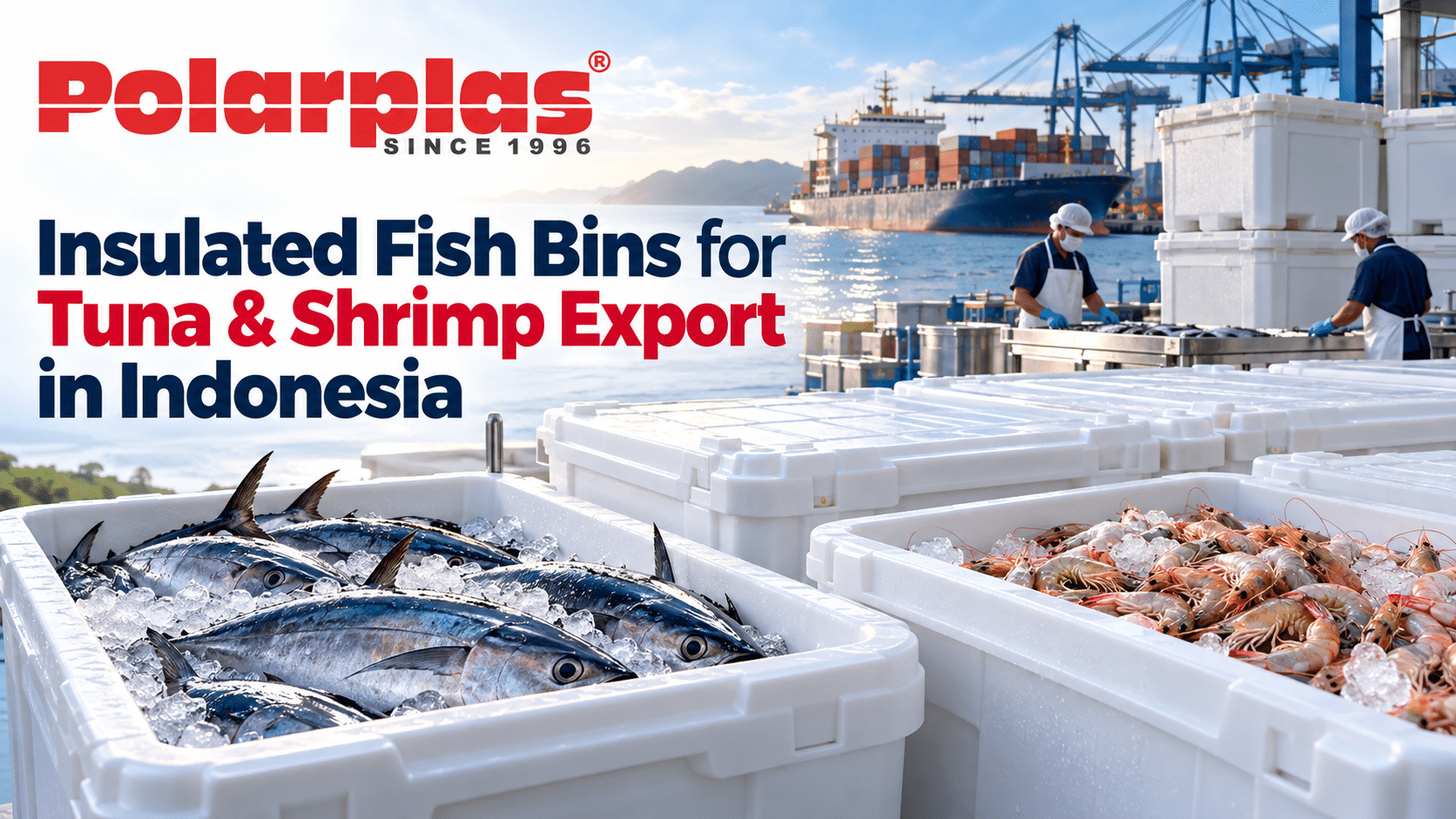
Indonesia sits at the centre of Asia’s seafood trade. From yellowfin tuna landed in Bitung to vannamei shrimp packed near Surabaya, every kilo of export-quality catch depends on one thing: how cold it stays between the boat and the port. That is why insulated fish bins for tuna and shrimp export in Indonesia are no longer optional. They separate a premium-grade shipment from a rejected one.
Polarplas is an export-focused manufacturer from Ahmedabad, India, and a sister concern of Seaplast (India) Private Limited. We make double wall insulated fish bins, tubs, round tubs and ice boxes by rotational moulding, with PE or PU foam insulation in LLDPE or HDPE. This guide explains why Indonesian exporters are moving away from disposable styrofoam, which sizes suit tuna and shrimp, and how to build a dependable cold chain from Jakarta to Makassar.
Why Indonesian Exporters Need Insulated Fish Bins
Indonesia is a major supplier of fresh, frozen and canned tuna, and a leading shrimp producer. Yet the weakest link is usually the first few hours after harvest. A study on cold chain implementation in frozen yellowfin tuna notes that Indonesia accounts for roughly 15% of world tuna production, and that export markets demand strict temperature control and food safety standards at every stage.
The risk is real. According to an STDF (Standards and Trade Development Facility) project on one-by-one tuna, Indonesia saw hundreds of export rejections between 2010 and 2020 linked to salmonella, filth, histamine and temperature control. Good insulated fish bins directly attack the temperature and hygiene part of that problem, because they keep ice in contact with the catch for longer and give you a smooth, seamless surface that is easier to wash.
Quick insight: In a field pilot with a fish wholesaler in Maumere, Kopernik compared styrofoam plus ice against an insulated box plus ice. Fish in the insulated box reached about 0.8 °C versus 1.4 °C for styrofoam, and the insulated option was recommended for a far longer service life. Read the full Kopernik fish preservation project.
Insulated Fish Bins vs Styrofoam Boxes: What Indonesian Buyers Compare
Search Indonesian B2B marketplaces and you will find mostly styrofoam fish boxes, usually 50 L class, sold by local suppliers on price and quick delivery. They work for short local trips. For tuna and shrimp export, however, the comparison changes once you count breakage, replacement and rejected lots.
| Factor | Styrofoam fish box | Polarplas insulated fish bin |
|---|---|---|
| Construction | Expanded polystyrene, single use feel | Seamless rotomoulded LLDPE/HDPE shell with PE or PU foam core |
| Service life | Often replaced around every six months in field use | Built for years of repeated use and washing |
| Strength and stacking | Cracks and crushes under load | Designed for stacking and forklift or pallet-jack handling |
| Cleaning | Porous surface, hard to sanitise fully | Smooth walls, optional drain outlet for meltwater |
| Cost over time | Low entry price, repeated buying | Higher entry price, lower cost per trip |
Polarplas Insulated Fish Bins and Tubs for Indonesian Seafood
Our products are designed exclusively for the export market, where durability, low deformation and consistent quality matter. They are built to perform from the heat of sub-Saharan ports to the extreme cold of North America, which makes tropical Indonesian harbours well within their working range. Here is the range most relevant to Indonesian exporters.
PE Foamed Fish Tubs and Bins
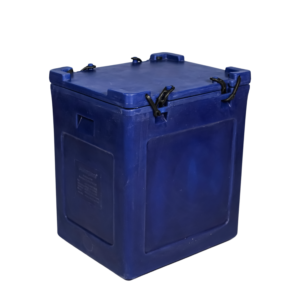
Twelve models from 200 L to 1400 L, ideal for bulk tuna, snapper and shrimp holding. Popular choices include the 1000 L fish tub and the 1400 L fish tub.
PUR Foamed Tubs and Bins
Polyurethane foamed bins for exporters who want stronger insulation performance during longer holding and transport.
Insulated Round Tubs
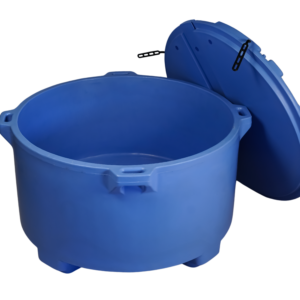
Round tubs in 500 L, 630 L and 660 L, well suited to fish processing lines. See the 630 L round tub or the 660 L round tub.
Insulated Coolers and Ice Boxes
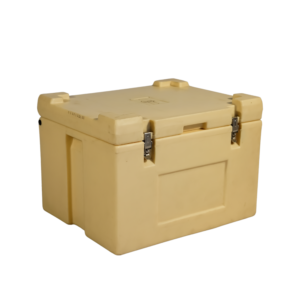
24 models from 15 L to 150 L for fishermen, market traders and small wholesalers, including the 100 L ice box.
Insulated Carts and Buggies
Move product inside processing plants and cold rooms without repacking, reducing handling time out of ice.
Vaccine Carriers and Custom Moulding
Aquaculture farms also need insulated vaccine carriers (25 L and 60 L), and we offer custom moulded products built to your specification.
Which Insulated Fish Bin Suits Tuna, Shrimp and Reef Fish?
Tuna (yellowfin, skipjack, bigeye)
Tuna must be chilled fast and kept cold through unloading, grading and loining. Large insulated fish tubs in the 600 L to 1400 L class let crews hold gutted fish in slurry ice without repeated transfers. Research on Indonesian tuna loin recommends handling at 4 °C or below, so a tub with a tight, insulated lid and drain outlet helps maintain that discipline at landing sites.
Shrimp (vannamei and tiger prawn)
Shrimp are time-sensitive and are usually packed in smaller lots. Mid-size bins and round tubs from 300 L to 660 L suit harvest-site chilling, while 100 L to 150 L insulated ice boxes work well for farm gate collection before the truck leaves for the processor.
Snapper, grouper and mixed reef fish
Many Indonesian exporters collect from small boats and consolidate at hubs. Kopernik’s Maumere case shows fish moving to an export hub in Makassar before reaching Singapore, Hong Kong, Japan and the UAE. For this chain, a mix of 50 L to 150 L ice boxes on the boat and larger tubs at the hub keeps cold chain continuity from island to port.
Pro tip for exporters
Pre-chill every bin with ice water before loading, drain meltwater through the outlet rather than opening the lid, and keep ice in direct contact with the fish. Small habits like these protect temperature far more than extra ice added late.
Insulated Fish Bins Across Indonesia: City by City
Demand for reliable cold chain equipment is spread across the archipelago. These are the main hubs where exporters, processors and wholesalers can benefit from insulated fish bins in Indonesia.
Jakarta (Muara Baru and Muara Angke)
The capital’s fishing ports handle large volumes of landed and imported seafood. Big PE foamed tubs and 100 L to 150 L ice boxes suit wholesalers and processors serving Greater Jakarta.
Surabaya and East Java
A strong base for shrimp, snapper and processed seafood moving through Tanjung Perak. Round tubs and mid-size bins fit processing lines and truck transfers.
Makassar and South Sulawesi
A well-known export hub where fish from eastern islands is consolidated, screened and repacked. Hub operators benefit from stackable tubs and ice boxes for feeder collection.
Bitung and North Sulawesi
A leading tuna landing region. Large insulated tubs support fast chilling and loin processing close to the dock.
Medan (Belawan) and North Sumatra
Serves Malacca Strait fisheries and shrimp farms. Both bulk tubs and farm-side ice boxes help maintain quality before export.
Bali (Benoa) and Banyuwangi
Benoa is a key port for fresh tuna and reef fish, while Banyuwangi supports tuna loin processing. Insulated bins reduce temperature swings in hot coastal conditions.
Kendari, Ambon and Eastern Indonesia
Remote landing sites need rugged, long-lasting equipment. Durable rotomoulded bins outlast styrofoam in harsh handling and long transport legs.
Semarang, Pekalongan and Central Java
Home to many small and mid-scale processors who value reusable, easy-to-clean containers that cut repeat purchase costs.
How to Choose the Right Insulated Fish Bin
Before you place an order, run your options through this checklist. It reflects the features competing suppliers highlight, such as forklift entry, drain valves, tie-downs and stackability.
- Capacity: match bin size to catch or harvest lot size so you fill it fully; half-empty bins lose cold faster.
- Insulation type: choose PE foam for general use or PU foam when you need stronger thermal performance for longer holds.
- Material: LLDPE or HDPE shells resist impact and repeated washing.
- Lid and tie-downs: an insulated lid with secure fastening keeps cold air in during truck and boat movement.
- Drain outlet: lets you remove meltwater without opening the bin.
- Handling: check forklift or pallet-jack access and stackability for your warehouse and container loading.
- Customisation: logos, colours, sizes and fittings can be requested through custom moulding.
Building a Boat-to-Port Cold Chain
Equipment is only one part of the system. Indonesian research and field projects point to the same fundamentals: chill the catch quickly, keep it at a steady low temperature, and avoid contamination from landing to loading. A simple, repeatable routine looks like this.
1. On the boat: use ice boxes or tubs with enough ice to cover fish fully.
2. At the landing site: transfer to larger insulated tubs with minimum time out of ice.
3. At the hub or processor: keep fish in insulated bins or carts until grading and processing.
4. Before export: pack into clean, pre-chilled bins and load directly into reefer containers.
Because insulated bins can be reused for years, exporters also cut waste compared with replacing broken styrofoam boxes every few months. For plant floors, pair your bins with hygienic pallets so stacked product stays off the ground. If you are comparing markets, you may also like our guide on cold chain containers in Mombasa.
Why Choose Polarplas for Insulated Fish Bins in Indonesia
Polarplas products are designed, developed and manufactured with export customers in mind. Production takes place at the Seaplast (India) factory in Mansa, Gujarat, with a corporate office in Ahmedabad, a European branch in London and a Middle East distributor in the UAE. You can read more about our company and review our certificates. If you want to explore the full catalogue, visit our products page.
What you can ask us for: size recommendations for tuna or shrimp, PE versus PU foam advice, custom lid and drain options, container loading plans and export quotations for Indonesian ports.
Frequently Asked Questions
Which insulated fish bin size is best for tuna and shrimp exporters in Indonesia?
For tuna, large tubs between 600 L and 1400 L suit landing sites and processors. For shrimp, 300 L to 660 L bins or round tubs work for harvest chilling, and 100 L to 150 L ice boxes suit farm gate collection. Our team can match sizes to your volumes and container loading.
Are insulated fish bins better than styrofoam boxes?
For repeated export use, yes in most cases. Insulated bins have a durable rotomoulded shell, stack better and are easier to clean. A Kopernik field pilot also found fish reached lower temperatures in an insulated box than in styrofoam, and recommended a much longer service life.
How long do insulated fish bins keep fish cold?
Hold time depends on ambient heat, the amount and type of ice, how full the bin is and how often it is opened. Pre-chilling, filling the bin and keeping the lid closed all extend cold retention. Contact us with your route and we will suggest a suitable model.
What materials are Polarplas insulated bins made from?
They are rotomoulded from LLDPE or HDPE with double wall insulation using PE or PU foam.
Can I get custom sizes, logos or fittings?
Yes. We offer custom moulded products, so you can discuss sizes, colours, lids and drain options for your specific operation.
Do you serve exporters in Jakarta, Surabaya, Makassar and Bitung?
Our products are made for the export market. Share your city, port and expected quantity through our contact page and we will provide an export quotation and shipping guidance.
Get Insulated Fish Bins for Your Indonesian Seafood Business
Tell us your species, volumes and port, and we will recommend the right bins, tubs and ice boxes.
Email: sales@polarplas.com | Phone: +91 79 4007 3880
Sources: Kopernik, Improving Fish Preservation; STDF Project PG/860; KKP, cold chain in frozen yellowfin tuna.
