
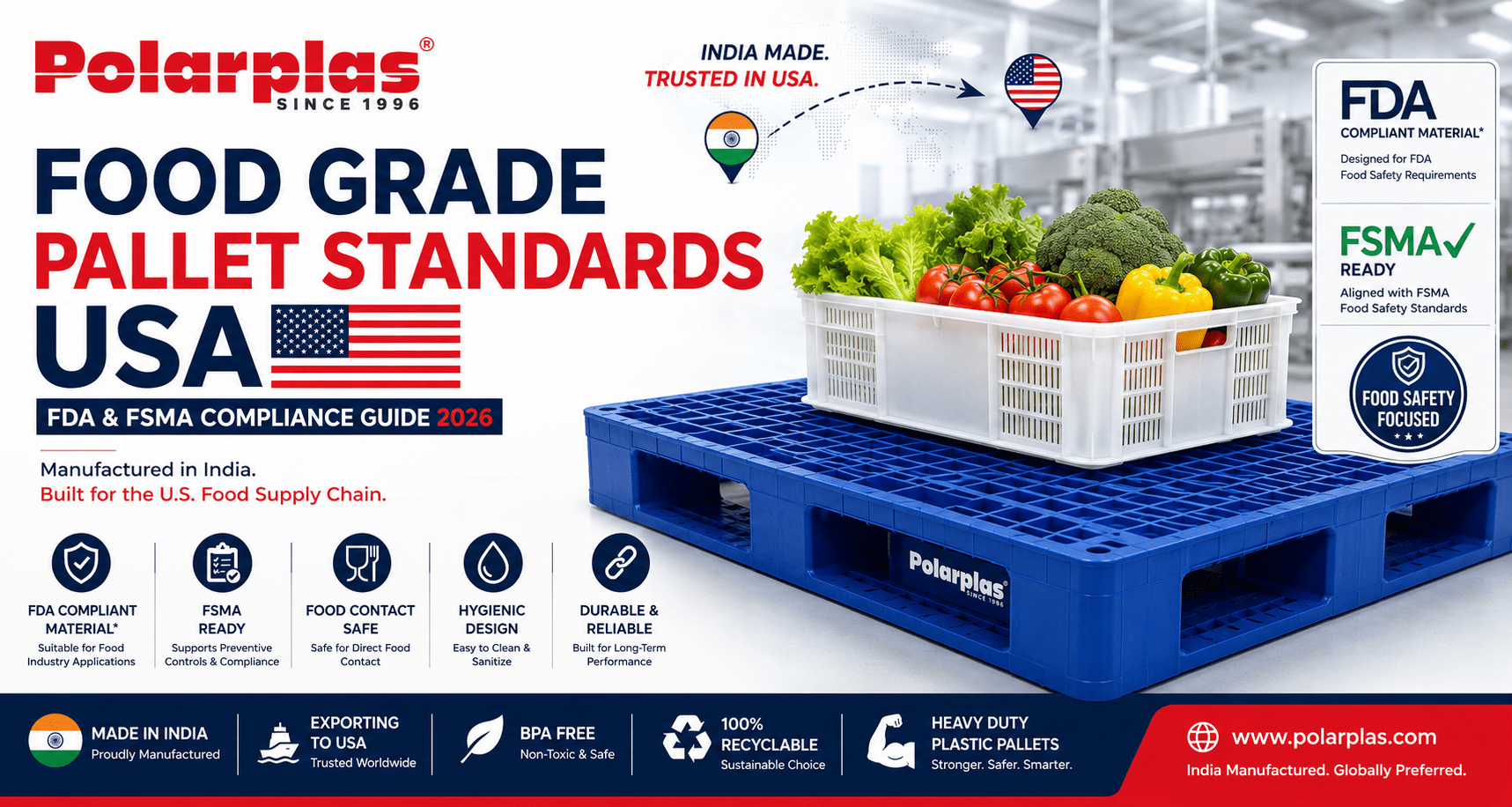
If you run a food processing plant, cold storage warehouse, or seafood export unit anywhere in the United States, chances are you have already asked yourself one crucial question: are my pallets actually safe for the food they carry? It is a question that regulators, auditors, and buyers are asking with growing urgency — and rightly so. A single non-compliant pallet can trigger contamination, product recalls, and reputational damage that no business can afford. In this guide, we break down everything you need to know about food grade pallet standards in the USA, why plastic is quickly replacing wood across the food supply chain, and how to choose a pallet that keeps your operation both compliant and efficient.
What Exactly Are Food Grade Pallets?
Food grade pallets are load-bearing platforms specifically manufactured to come into direct or indirect contact with food products without posing any risk of contamination. Unlike traditional wooden pallets, which are porous, prone to splintering, and a breeding ground for bacteria and pests, food grade pallets are built from materials that are non-toxic, non-porous, and easy to sanitize. The two most trusted materials in this space are High-Density Polyethylene (HDPE) and food-grade Polypropylene (PP) — both approved for food-contact applications and widely used by manufacturers serving the cold chain, seafood, meat, dairy, and pharmaceutical industries.
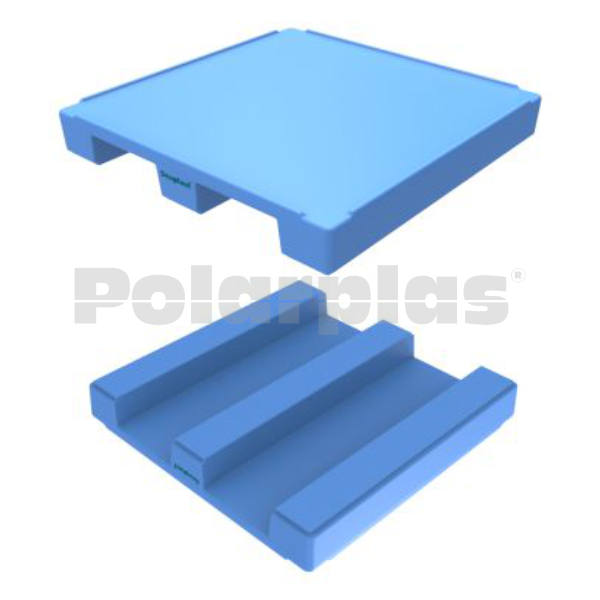
What sets a genuinely food grade pallet apart is not just the raw material, but the entire manufacturing philosophy behind it — smooth sealed surfaces, no exposed nails or splinters, resistance to moisture absorption, and compatibility with standard industrial sanitizers. Polarplas manufactures its Hygienic Pallets range using rotational moulding technology specifically to meet these demands for export-grade food handling.
Why Food Grade Pallet Standards Matter More Than Ever
The stakes in food logistics have never been higher. With global supply chains stretching across continents and consumers demanding greater transparency, a single lapse in hygiene at the pallet level can ripple across an entire batch of product. Contaminated wood pallets have historically been linked to bacterial cross-contamination, moisture retention, and pest infestation — all of which are now under intense regulatory scrutiny.
This is precisely why the food and beverage, seafood export, and cold storage industries across the US are actively shifting toward certified food grade plastic pallets. It isn’t just a hygiene upgrade — it’s becoming a baseline requirement for doing business with major retailers, auditors, and export partners. Businesses handling temperature-sensitive goods often pair hygienic pallets with insulated coolers and ice boxes to build a genuinely contamination-resistant cold chain from the storage floor right through to final delivery.
The Regulatory Backbone: FDA, FSMA, and ISO 22000
1. FDA — Title 21 CFR (Parts 170–199)
The US Food and Drug Administration enforces regulations under Title 21 of the Code of Federal Regulations, specifically Parts 170 through 199, which govern food contact substances. These rules require that any material touching food — directly or indirectly — must be non-toxic, chemically inert, and free from substances that could migrate into food products. For pallets, this means the resin itself, along with any colorants or additives, must be sourced from FDA-approved, food-safe formulations.
2. FSMA — Food Safety Modernization Act (2011)
The Food Safety Modernization Act fundamentally changed how the FDA polices the food supply chain. Instead of simply reacting to contamination incidents, FSMA empowers the FDA to mandate proactive sanitation controls — and pallets, being classified as transportation equipment, fall squarely within its scope. Non-compliance under FSMA can lead to consequences ranging from mandatory recalls to suspension of a facility’s registration, making pallet hygiene a genuine business-continuity issue rather than a mere formality.
3. ISO 22000 — Food Safety Management
While pallets themselves are rarely “certified” in the traditional sense, many large buyers and retailers now expect suppliers to demonstrate alignment with ISO 22000, the international standard for food safety management systems. Having documentation that traces material composition, manufacturing practices, and Good Manufacturing Practices (GMP) compliance gives buyers the assurance they need before signing a purchase order.
HDPE vs. Food-Grade PP: Which Material Wins?
Choosing between HDPE and PP often comes down to the specific demands of your operation:
- HDPE (High-Density Polyethylene): Offers excellent impact resistance, very low moisture absorption, and strong chemical compatibility with common food-safe sanitizers. Ideal for cold chain, seafood, and general food warehousing where durability under repeated handling matters most.
- Food-Grade PP (Polypropylene): Provides superior heat resistance, making it the preferred choice for facilities that run hot-water wash cycles or steam-based sanitation as part of their cleaning protocol.
Both materials, when sourced from certified suppliers, are fully capable of meeting FDA-compliant grades — the real differentiator lies in matching the material to your operational environment.
Hygienic Design Features That Actually Matter
Not every plastic pallet on the market is created equal. When evaluating suppliers, look closely for these hygienic design markers:
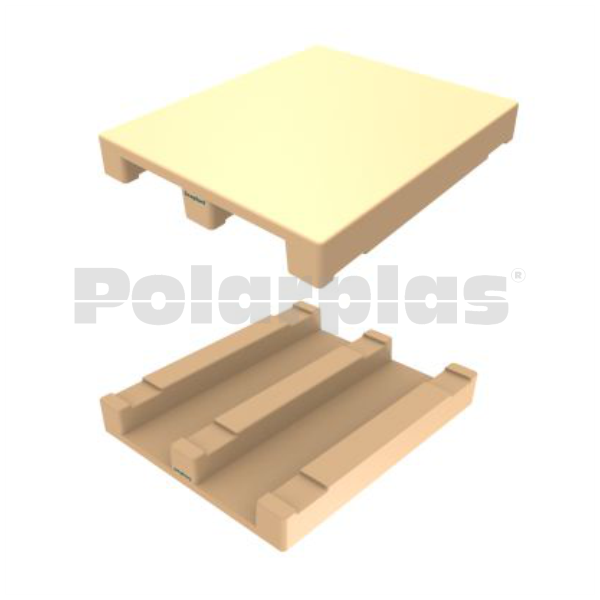
- Smooth, sealed surfaces with no crevices, seams, or gaps where bacteria, moisture, or food debris could accumulate
- Zero wood components — eliminating the risk of splintering and pest infestation entirely
- Easy sanitation — compatible with standard industrial cleaning chemicals and, where needed, hot water wash-down
- Consistent load rating and dimensional accuracy — critical for automated conveyor systems and warehouse robotics integration
- Non-absorbent core — preventing moisture retention that could otherwise support microbial growth over repeated use cycles
Pallet Sizing: What US Buyers Should Know
Pallet dimensions are not universal, and choosing the wrong size can add unnecessary freight and warehousing costs. The United States predominantly uses the GMA pallet standard (48″ x 40″), while international shippers and many Asian and European markets work with 1200mm x 1000mm or 1200mm x 800mm (Euro pallet) footprints. If your business ships internationally or receives imported goods on non-standard pallets, it is worth confirming with your supplier that the pallet footprint matches your container loading pattern, racking system, and forklift or conveyor equipment — mismatched sizing is one of the most common (and avoidable) causes of warehouse inefficiency.
Traceability: An Often-Overlooked Compliance Requirement
Beyond material and design, modern food safety audits increasingly expect traceability at the pallet level — the ability to confirm exactly which batch, manufacturing date, and material lot a pallet belongs to. This is where features like RFID tagging, barcode/QR code marking, and in-mould serial numbering come in. Polarplas builds these tracking options directly into its hygienic pallet range, allowing operators to trace a pallet’s raw material origin all the way through to final dispatch — a feature that is quickly becoming standard practice for larger US retailers and auditors conducting FSMA compliance checks.
Plastic Pallets vs. Wooden Pallets: The Real Comparison
Wood has been the default pallet material for decades, largely due to cost and availability. But when measured against modern food safety standards, plastic pallets consistently come out ahead:
| Parameter | Wooden Pallets | Food Grade Plastic Pallets |
|---|---|---|
| Moisture Absorption | High | None |
| Pest Infestation Risk | High | Negligible |
| Splintering | Common | None |
| Sanitization Ease | Difficult | Simple, repeatable |
| Traceability | Rarely available | RFID / barcode / serial number ready |
| Lifespan | 3–5 years (with damage) | 10+ years |
Who Needs Food Grade Pallets the Most?
While every food business benefits from hygienic pallets, certain sectors face particularly strict scrutiny:
- Seafood processing and export units — where cold chain integrity and contamination control are non-negotiable
- Cold storage and warehousing facilities — handling frozen and chilled goods across long storage durations
- Meat and poultry plants — operating under intense FDA and USDA scrutiny
- Dairy processing units — where moisture control is especially critical
- Pharmaceutical and vaccine cold chain logistics — requiring the highest levels of traceability and hygiene
Many of these same facilities also depend on insulated storage equipment such as refrigeration products and insulated round tubs to maintain product integrity from processing floor to final transport — hygienic pallets are simply one piece of a larger contamination-resistant supply chain.

How Polarplas Hygienic Pallets Are Built for These Standards
At Polarplas, our Hygienic Pallets are rotationally moulded from premium-grade LLDPE and HDPE, engineered specifically for the demands of export-grade food handling. Every pallet is designed with a smooth, non-porous surface, zero wood content, and dimensional consistency built for automated handling systems — the same qualities that global auditors and food safety inspectors look for. Our pallets are also available with RFID tagging, barcode/QR code marking, and in-mould serial numbering for full batch traceability, along with a range of marking options including in-mould embossing, engraving, and screen printing for branding needs.
Combined with our decades of experience manufacturing insulated fish tubs and ice boxes for international markets, our pallets are engineered to perform reliably across the harshest logistics environments — from sub-zero cold storage to high-humidity coastal warehouses. For businesses with unique dimensional or load-bearing requirements, our Custom Moulded Products service can also design pallets to precise specifications.
Choosing the Right Supplier: A Quick Checklist
- Ask for documentation on resin type and food-contact compliance
- Confirm whether the material is HDPE or PP, and match it to your cleaning protocol (cold wash vs. hot wash)
- Check for consistent load ratings and dimensional tolerances
- Verify pallet footprint compatibility with your racking, conveyor, and shipping container requirements
- Ask whether traceability options like RFID, barcode, or serial numbering are available
- Request references from other food or cold chain clients
- Ensure the manufacturer follows Good Manufacturing Practices (GMP)
Final Thoughts
Food grade pallet standards are no longer a “nice to have” — they are a foundational requirement for any business operating within the modern US food supply chain. As FSMA enforcement tightens and buyers grow increasingly selective about their supply chain partners, investing in genuinely hygienic, FDA-aligned plastic pallets is one of the simplest ways to protect your product, your reputation, and your bottom line. Whether you are running a seafood export unit in New Bedford, a cold storage facility in Seattle, or a meat processing plant anywhere in between, the right pallet can make the difference between compliance and costly disruption. Explore our full Hygienic Pallets range or get in touch with our team to discuss your specific requirements.
Frequently Asked Questions
Q1: What makes a pallet “food grade” under FDA standards?
A pallet is considered food grade when it is manufactured from non-toxic, non-porous materials — typically HDPE or food-grade PP — that comply with FDA regulations under Title 21 CFR Parts 170–199, and do not leach harmful substances into food products.
Q2: Are plastic pallets FDA certified?
Pallets themselves are not typically “certified” by the FDA. Instead, they must be manufactured using FDA-compliant materials and processes, and manufacturers should provide documentation confirming this compliance upon request.
Q3: Why are wooden pallets being phased out in food industries?
Wooden pallets are porous, prone to splintering, and can harbor bacteria, moisture, and pests — all of which pose contamination risks under FSMA sanitation requirements. Plastic pallets eliminate these risks entirely.
Q4: What is the difference between HDPE and PP food grade pallets?
HDPE offers excellent impact resistance and moisture resistance, ideal for cold chain and seafood handling. Food-grade PP offers better heat tolerance, making it suitable for facilities using hot water or steam-based sanitation.
Q5: How often should food grade pallets be cleaned?
Cleaning frequency depends on usage intensity and the type of product handled, but regular sanitation using standard industrial cleaners is essential to maintain compliance and hygiene in food environments.
Q6: Do food grade pallets need ISO certification?
While not mandatory, many buyers request suppliers to demonstrate alignment with ISO 22000 food safety management standards as an added layer of assurance and traceability.
Q7: Can food grade pallets be tracked for traceability?
Yes. Many manufacturers now offer RFID tagging, barcode or QR code marking, and in-mould serial numbering on hygienic pallets, allowing businesses to trace raw material origin and manufacturing details through to final dispatch.
